He Turned Down a Michael Jackson Music Video Because of Kolya: The Nearly Forgotten Story of Miloš J. Kohout
What connects the Oscar-winning film Kolya, a Promax Award for TV Nova’s graphics, and an offer to make a music video for Michael Jackson? One man who has spent more than half a century bringing together painting, film, and new technologies. Yet his story begins with a boy who simply wanted to play.
When people hear the name Kolya, most of us think of Zdeněk Svěrák, the young Andrej Chalimon, or the gleam of the Oscar statuette the film won in 1997. Few people know, however, that the man who helped shape its final visual form also championed something that was almost unthinkable in Czech cinema at the time: a studio-based approach inspired by Hollywood productions.
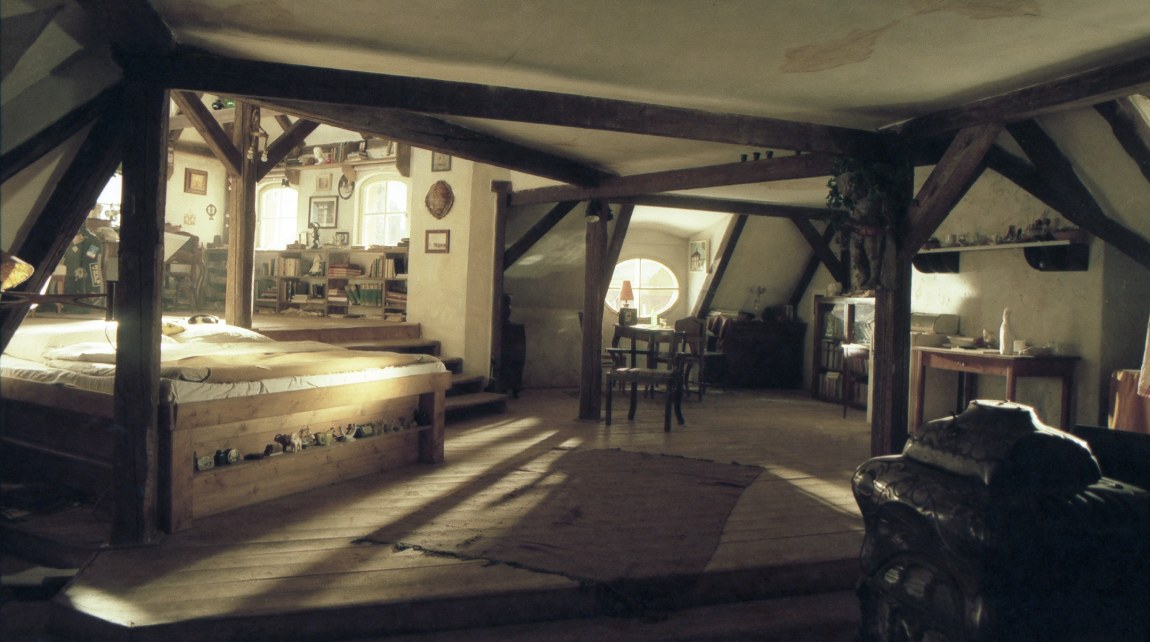
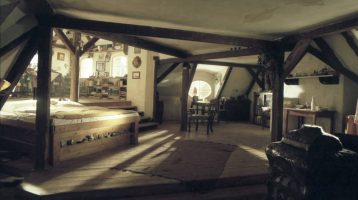
František Louka’s apartment in Kolya was not a real apartment, but a studio set built four metres above the ground.
He helped create a world that had to look so natural on screen that viewers would never stop to wonder how much of it was, in fact, a carefully constructed illusion. František Louka’s apartment was not located in an ordinary Prague building. It was a studio set several metres above the ground, complete with a view of St Nicholas Church, rain beyond the windows, and pigeons that—unlike the actors—proved rather difficult to persuade to follow the script.
That man was Miloš J. Kohout.
And yet today, only a handful of people know his name.
In the 1990s, he was among those who helped change the way Czech cinema thought about the image. He could combine painting, set design, visual effects, and emerging digital technologies to create worlds that often did not exist in front of the camera at all.
His professional biography reads almost like fiction. Alongside the Oscar-winning Kolya, he worked on numerous major Czech and international films, directed award-winning image commercials and music videos, created television graphics, and received international accolades. One of his music videos remained in the American MTV Top 40 for two months. And while filming Kolya, he received an offer that would have made most people pack their bags immediately. He turned it down.
That may be the best reason of all to finally tell his nearly forgotten story.
The boy who wanted to play
Miloš’s arrival in the world had proportions that a maternity ward today would probably classify as an extraordinary event. He was born on 9 September 1955 at Prague’s Provincial Maternity Hospital and weighed an astonishing 5.20 kilograms. According to family lore, the head physician was so delighted with him that he personally carried the baby around to show the other women in labour.
“Look—this is what every baby should look like.”
So Miloš’s first public presentation was arranged not by a gallery owner, but by the head of a maternity ward.
A few years later, his first-grade teacher asked the class a question generations of children have heard: “What do you want to be when you grow up?”
While the other children talked about becoming doctors, drivers, or astronauts, little Miloš looked at his teacher and answered with perfect innocence: “I want to play.”
No one yet knew that this seemingly naïve wish would actually come true. His games would simply come to weigh several tonnes, stand in the middle of film studios, and occasionally require their own rain machine.
The world beyond the school doors, however, did not always understand an imagination that refused to be restrained.
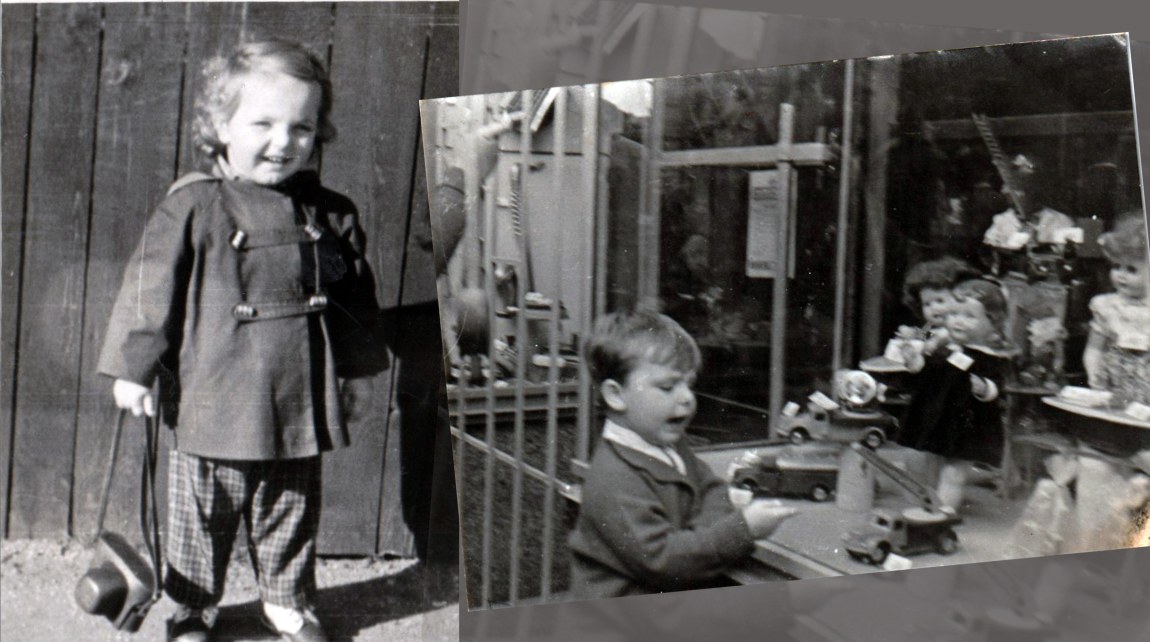
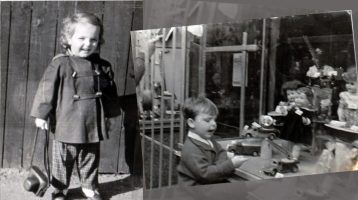
Miloš J. Kohout as a child. Even then, he liked nothing better than playing—and the desire to transform play into art has stayed with him throughout his life.
From childhood, Miloš carried the stigma of his family’s political record. His grandfather had been active in politics during the First Czechoslovak Republic and, when the Communists came to power, reportedly declared that it would mean the death of the nation. Statements like that were not forgiven after February 1948. They remained in official assessments, in bureaucrats’ memories, and often in the destinies of children and grandchildren.
His father, the respected filmmaker Miloš Kohout Sr—whom television audiences would many years later come to know as one of the presenters of Kinobox—was, according to his son, certainly not a man who kept his opinions to himself.
A job in the make-up department instead of an education
Miloš was the only applicant to arrive by tram for the entrance examinations at the art school on Hollar Square. The others came in Tatra 603s—cars reserved primarily for senior state and Communist Party officials. To this day, Miloš remembers that the children who stepped out of those cars were all among those admitted.
He was not. Although he passed the examinations, he lacked something no amount of talent could provide: working-class origins.
But he did not abandon his desire to pursue art. He simply entered through the door the regime had left slightly ajar. He joined the make-up department at Barrandov Studios and began learning the craft. It was precise, artistic, and practical work all at once. It taught him to treat the human face as a material on which every mistake would remain visible in a film close-up.
It soon became clear that the make-up department might also open his first route abroad.
“Nema problema.” And suddenly the problem became international
In 1975, Montenegrin director Veljko Bulajić began filming the lavish Czechoslovak-Yugoslav production The Day That Shook the World. Its international cast included Christopher Plummer, Florinda Bolkan, and Maximilian Schell, and Miloš recalls that Bulajić personally requested him for the shoot.
The Czechoslovak authorities had other ideas. Miloš was considered politically unreliable and was also due to begin compulsory military service. Their answer was brief: he was not going anywhere.
When Bulajić heard, he shrugged, uttered his favourite phrase—“Nema problema”—and returned to Yugoslavia.
Soon afterwards, Miloš was summoned for questioning. Instead of offering an explanation, officials asked what connection he had with Comrade Tito.
“None at all. I only know that he is the president of Yugoslavia,” he answered truthfully.
According to Miloš’s recollection, Bulajić had appealed directly to Yugoslav president Josip Broz Tito. Tito allegedly sent a letter to the Central Committee of the Communist Party of Czechoslovakia warning that unless the young artist arrived on set within a week, Yugoslavia would close its borders to Czechoslovak tourists. The machinery of state, which until then had not lifted a finger, suddenly began to move with surprising speed.
A few days later, Miloš was on a plane to Sarajevo, where a smiling Bulajić was waiting for him.
“You see? Nema problema.”
Both Milošes ultimately worked on the film. The father was an assistant director; the son joined the make-up team. During approximately two months on set, the younger Miloš encountered demanding film effects for the first time. He remembers, for example, creating convincing torture injuries for Maximilian Schell.
What else should a boy who mainly wanted to play have done? His toys were no longer building blocks, but film blood, latex, and the face of an international star.
When military service smelled of oil paint
After Sarajevo came the compulsory military service that had been postponed. Thanks to one of his mother’s contacts, he joined the Army Arts Ensemble in Žatec as a military artist. While most of his peers spent their days on the training ground, Miloš designed certificates for the National Committee in Ústí nad Labem, labels for a brewery in Most, and artistic schemes for interiors and formal conference rooms.
Paradoxically, the army gave him something most emerging artists could only dream of: commissions, materials, and a studio of his own. Each year, he had forty thousand Czechoslovak crowns at his disposal for art supplies.
It was in Žatec that he first opened tubes of oil paint. He still speaks of their smell as the moment his fate was sealed.
“That was when I was lost for good.”
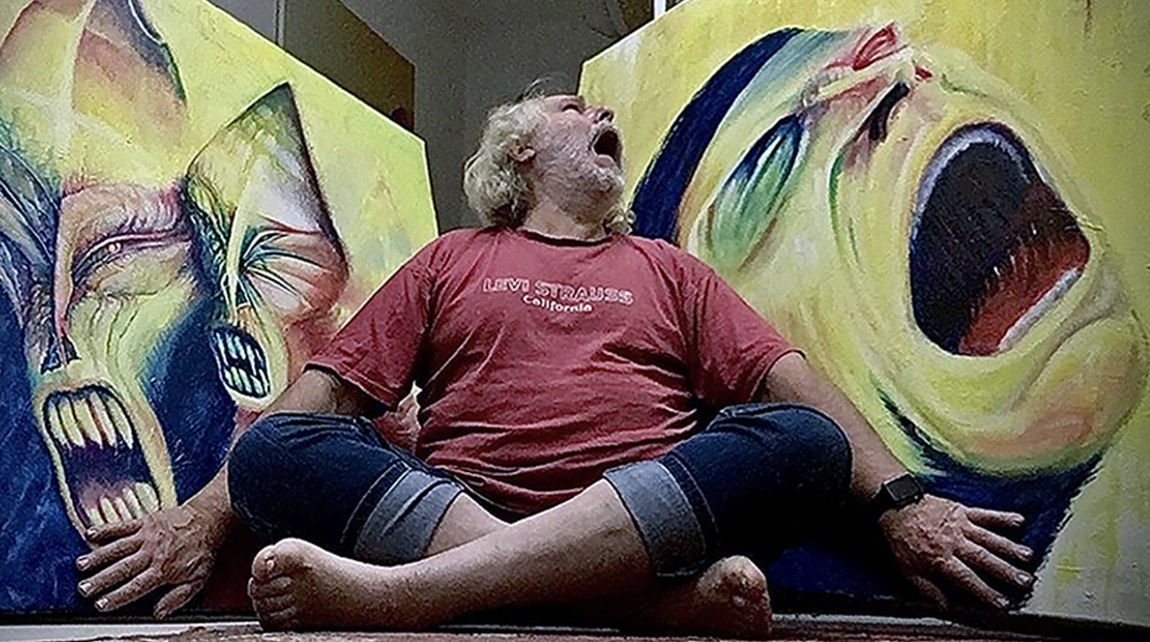
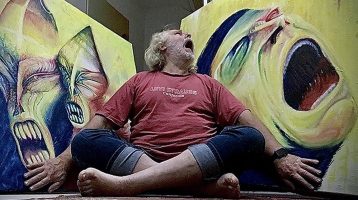
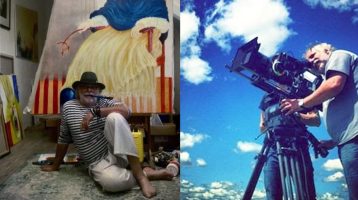
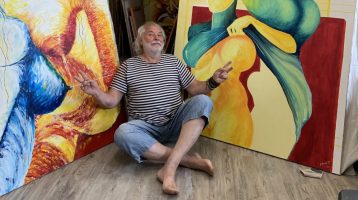
Miloš J. Kohout in his studio, surrounded by paintings from his current body of work.
He later exhibited the paintings created during his military service at a gallery on Michalská Street in Prague. He held his first solo exhibition there in 1978, aged only twenty-three.
For him, however, a canvas was never merely a static surface. Even then, he thought in images, light, and space, where perspective did not have to run in straight lines but could bend into curves and create an atmosphere of its own. He was interested not only in the scene itself, but in what it could awaken in the viewer. This ability would later become one of his greatest assets in film: he could see the finished image before others had even begun to create it.
He established a studio in Prague’s Vinohrady district, and further exhibitions followed. But in socialist Czechoslovakia, painting and exhibiting were not enough. Anyone who wanted to make a full-time living from art also needed official registration. Without it, Miloš had to continue reporting for work at Barrandov Studios.
He therefore decided to complete his education at the Academy of Fine Arts. But a professor who already knew his work asked him a simple question: did it really make sense to return to school for six years merely for a card, when he had already held solo exhibitions?
The professor advised him to continue painting and exhibiting, and Miloš eventually obtained official registration without studying at the Academy.
Another option was to join an artists’ group. But what Miloš needed above all was freedom.
So he continued to paint and exhibit, gradually creating a world of his own—without art school, but with a studio, experience from Barrandov, and the certainty that a childhood wish could come true in the most unexpected fashion.
He did not yet know that everything he was learning before the canvas about light, space, perspective, and atmosphere would one day be carried before a film camera. And when Czech cinema began searching for a new visual identity after the revolution, he would be ready.
A talent that caught Hollywood’s attention
In 1979, the American-British television film All Quiet on the Western Front was shot amid the demolished remains of the old city of Most. It was directed by Academy Award winner Delbert Mann and produced by Norman Rosemont. Miloš heard about the production from his father and applied for an audition.
He first submitted several sketches. But paper will tolerate almost anything, so the two Americans wanted to know whether their author could work just as convincingly without time for corrections. When they arrived in Czechoslovakia, they placed an ordinary sheet of paper and a pencil in front of him.
No colours, no effects—and, above all, no undo button.
Miloš sat down and began to draw. He recalls that the two men were impressed not only by the precision of his drawing, but by his ability to think instantly in images and propose compositions for future scenes. He went on to collaborate on the film’s visual design, preparing drawings and compositional studies.
It was then, Miloš says, that Norman Rosemont offered him work in the United States and a place on the forthcoming film Gandhi. It was an offer that could have changed his entire life.
But Miloš did not go. Following his Yugoslav interlude, the authorities had confiscated his passport.
His next fateful encounter took place in Prague. And it began with an absolutely dreadful shade of green.
The encounter that changed everything
Professor František Dvořák—one of the most respected Czech art historians of the second half of the twentieth century, a scholar who lectured around the world, wrote dozens of specialist publications, and whose opinion carried exceptional weight in the art world—was advised to visit the work of a young painter. There were two galleries on the street he went to, however, and the professor accidentally entered the wrong one.
Some time later, Miloš’s telephone rang.
“You have no idea how to apply colour! That green is absolutely dreadful!”
At the other end of the line, Miloš was stunned. He had no idea what was happening and finally said: “Professor… but I never use green.”
Only then did they both realise there had been a mistake.
When Professor Dvořák subsequently saw Kohout’s actual paintings, he immediately recognised their distinctive artistic voice and decided to help him. He arranged a partnership with Artcentrum, through which Miloš’s paintings began finding their way into foreign galleries and private collections. Steve Jobs later became one of their collectors. The founder of Apple even gave him his first Macintosh computer.
There was a peculiar paradox in this. The same state that obstructed a young artist’s education and freedom to create was simultaneously exporting his paintings as representative examples of Czechoslovak art.
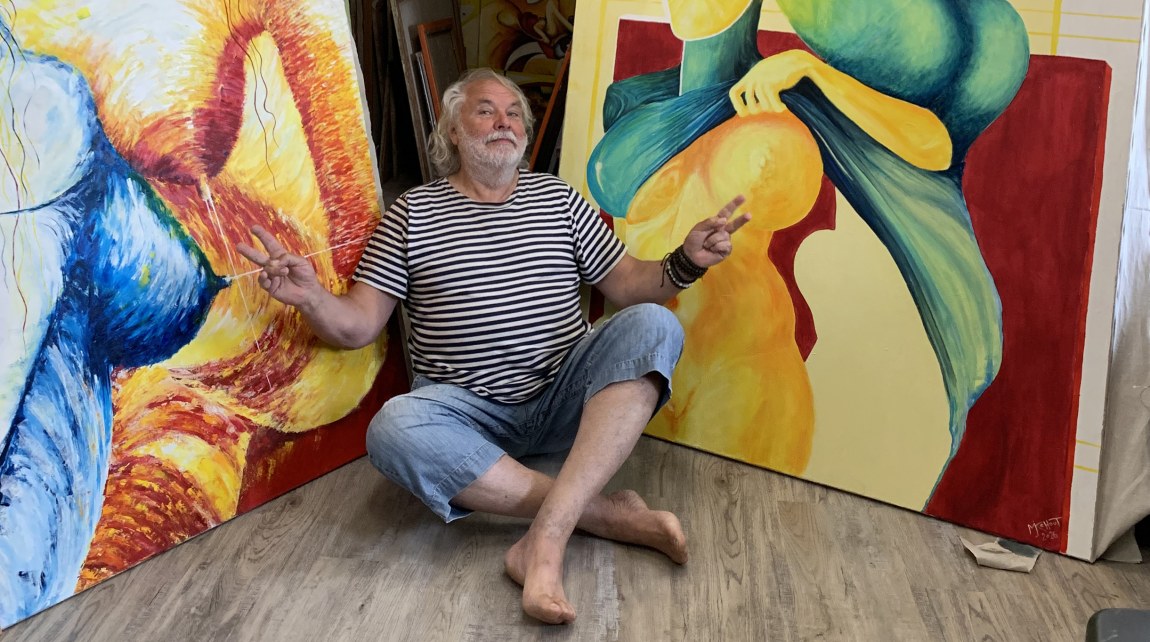
Miloš J. Kohout in his studio, surrounded by paintings from his current body of work.
Under the protective wings of Laterna Magika
He spent several years working intensively in his Vinohrady studio. Yet free creation in Czechoslovakia always came at a certain risk. Because of his origins and anonymous denunciations, he was repeatedly summoned for questioning. The psychological pressure eventually culminated in the withdrawal of his official artist’s registration. Overnight, he lost both his studio and the right to exhibit.
In 1988–89, like several other artists harassed by the regime—including Evald Schorm and Antonín Máša—he found refuge under the protective wings of Professor Josef Svoboda at Laterna Magika.
The internationally acclaimed stage designer became his mentor. He taught Miloš to think of a stage as a living organism, to work with space, light, and movement, and to perceive an image in wider relationships that would later have a profound influence on his film and television work.
But the world abroad continued to attract him.
In 1989, director Aleksandar Petrović was preparing the French-Yugoslav historical film Migrations (Seobe). The production needed eight large-format canvases and a number of period Baroque paintings, and it wanted Miloš for the job. In the days before mobile phones, however, reaching him was not easy. The message eventually found its way to his father, who immediately passed it on. Miloš once again flew to Yugoslavia, where an enormous studio and an extraordinary artistic challenge awaited him.
While Miloš worked abroad, Professor Josef Svoboda personally appeared before the approval committee at Prague’s Mánes. With the authority he had earned at home and internationally, he argued for the restoration of Miloš’s artist’s registration.
It was the gesture of a man who had decided to stand behind a talent he believed in.
Fourteen days until the London premiere
The restored registration brought another major challenge.
Jiří Srnec, founder of the legendary Black Light Theatre, contacted Miloš while preparing a new production of Alice in Wonderland and asked for his artistic opinion. Miloš’s answer was unequivocal: the entire set had to be redesigned.
There were only fourteen days left before the London premiere.
Miloš did not hesitate. He invited his long-time friend Richard Maška—then a designer and puppeteer at the Spejbl and Hurvínek Theatre—to his Vinohrady studio. Together, day and night, they cut apart the finished scenery, created new props, and built an entirely new visual world.
The risk paid off. After the London premiere, British critics wrote that the Black Light Theatre had acquired a new, modern face. Miloš only learned about those reviews much later.
After Alice came another phone call, this time from Barrandov. Production manager Jaroslav Bouček was looking for an artist willing to go to Germany for fourteen days to help film the children’s series Super Detective Club. Miloš agreed.
The planned fourteen days ultimately became almost three years.
When the Velvet Revolution began in November 1989, he returned to Prague to witness the events transforming Czechoslovakia. Laterna Magika, which had provided him with professional refuge in the preceding years, had meanwhile become one of the centres of the Civic Forum. It was then that Miloš also discovered that Josef Svoboda had been responsible for restoring his artist’s registration.
After the revolution, he returned to Germany.
Freedom changed the rules, but not his nature
After November 1989, both society and the way Czech films were made underwent a transformation. The old production system was collapsing, the new one was only beginning to take shape, and artists suddenly gained a freedom that came without an instruction manual.
For Miloš, it was a natural environment. Throughout his life, he had moved between disciplines whose boundaries he never particularly respected. He could think like a painter, a set designer, and a filmmaker at the same time. He was not interested in which professional category his work fitted. He cared about what the final image would look like.
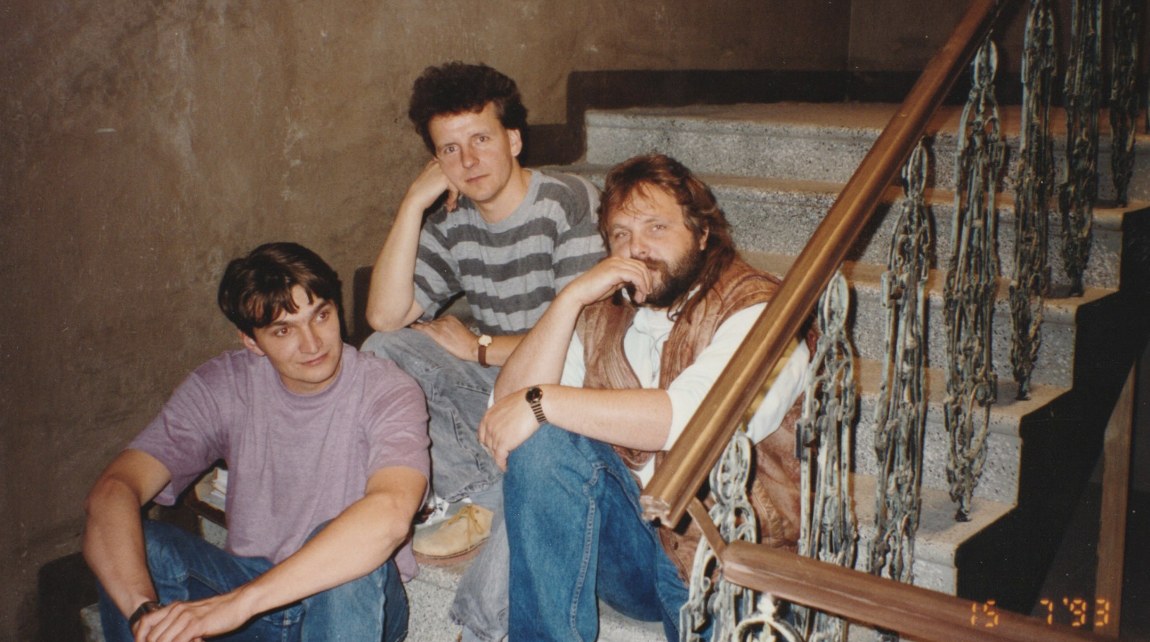
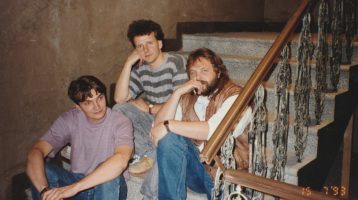
From left: Jan Svěrák, cinematographer F. A. Brabec, and Miloš J. Kohout during the filming of Accumulator 1 in 1993.
Even before the revolution, he had worked on the visual design of the international film The Last Butterfly, released in 1990. It was followed by films that significantly shaped post-revolutionary Czech cinema: Accumulator 1, The War of Colours, and later Kolya.
The War of Colours also became symbolically connected with the story of Kino MAT. During its production, the cinema hall was used for the first time as a work-in-progress screening room, and Jan Mattlach later received the first Czech Lion ever awarded for editing for his work on the film.
Miloš’s greatest international success, however, was still to come.
He turned down Michael Jackson because of Kolya
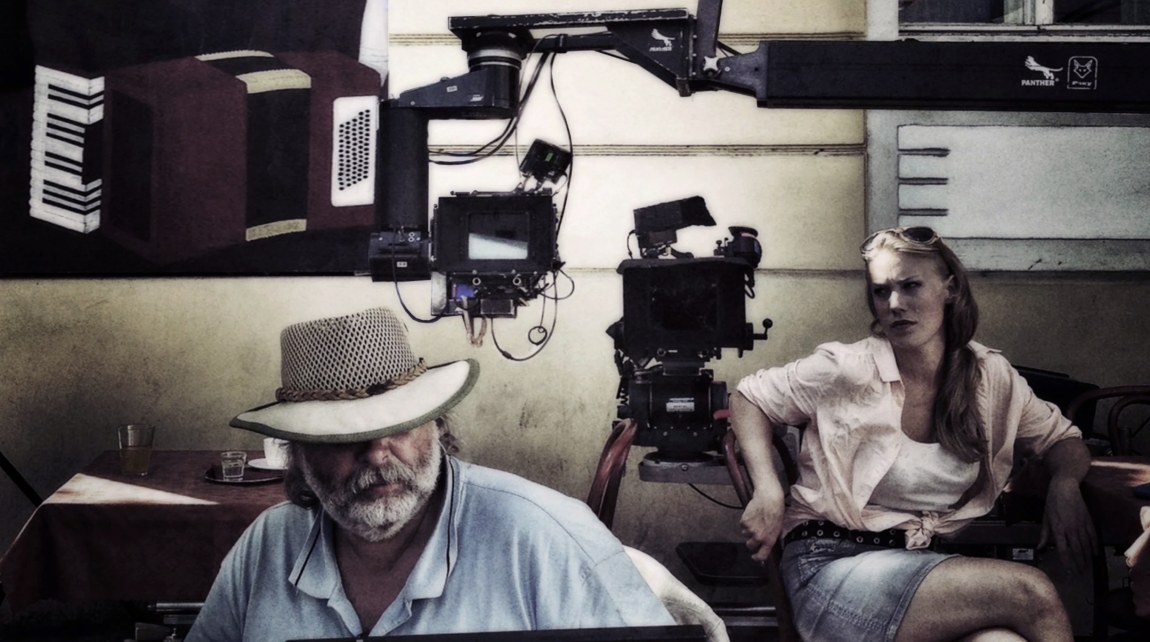
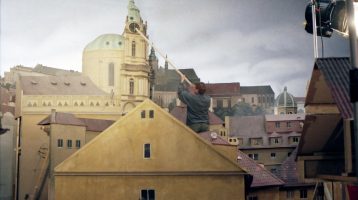
During the making of Kolya, Miloš helped shape the film’s final visual form. It was he who insisted that František Louka’s apartment should not be filmed in a real Prague building, but built as a studio set where the filmmakers could control every detail of the image—with the exception of the disobedient pigeons mentioned at the beginning.
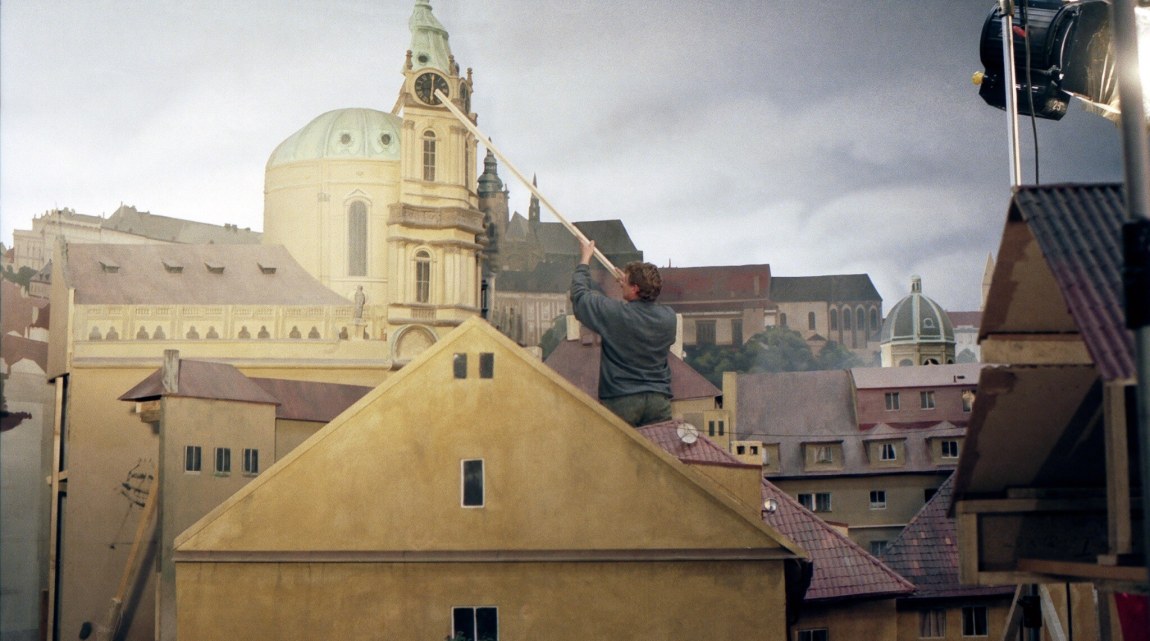
The four-metre-high model of St Nicholas Church in the miniature Prague set. The clock hands were adjusted to match the time in which each filmed scene took place.
It was during this work that, according to Miloš, one of the most remarkable situations of his professional life unfolded. A producer flew in from the United States to ask whether he would be interested in taking part in the production of a Michael Jackson music video.
For most people, such an offer would have meant only one thing: pack a suitcase immediately and find the nearest plane. Miloš, however, had a film in progress and needed another fourteen days to complete his work. He refused to walk away from a project to which he had committed himself.
They met at the Hotel Paris in Prague. The American producer was perhaps as surprised by Miloš’s decision as by his explanation that he was working on a Czech film with which they intended to win an Oscar. Out of curiosity, he asked how large the budget for Kolya was. Miloš’s answer led to a comparison that perfectly illustrated the gulf between Czech cinema and the American music industry. The Michael Jackson video was to cost fifty million dollars. Kolya had a budget of sixty million Czech crowns.
Even that did not change Miloš’s mind.
He did not reject the offer because Michael Jackson was not famous enough. Fame had simply never been a sufficient reason for him to abandon unfinished work.
Kolya did indeed go on to win the Academy Award for Best Foreign Language Film and became one of the most celebrated Czech films of the modern era. For his own small role as a man emerging from a bathroom, Miloš also received an Ota Hofman Award for supporting performance.
The aeroplanes that never took off
Over the following decades, Miloš worked as a set designer, visual artist, special-effects director, or art supervisor on numerous major Czech films. Alongside the Oscar-winning Kolya, his filmography includes Accumulator 1, Dark Blue World, Kooky, Smart Philip, and The War of Colours.
When Jan Svěrák began preparing Dark Blue World, the filmmakers faced a task of exceptional difficulty by Czech standards. They needed to create convincing wartime aerial battles without access to a real air fleet or a Hollywood budget.
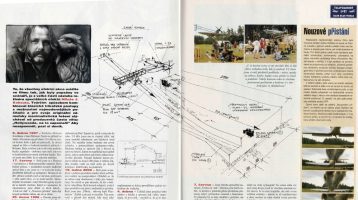
Miloš J. Kohout and his visual-effects designs for Dark Blue World. A double-page spread from Cinema magazine, issue 3/2001.
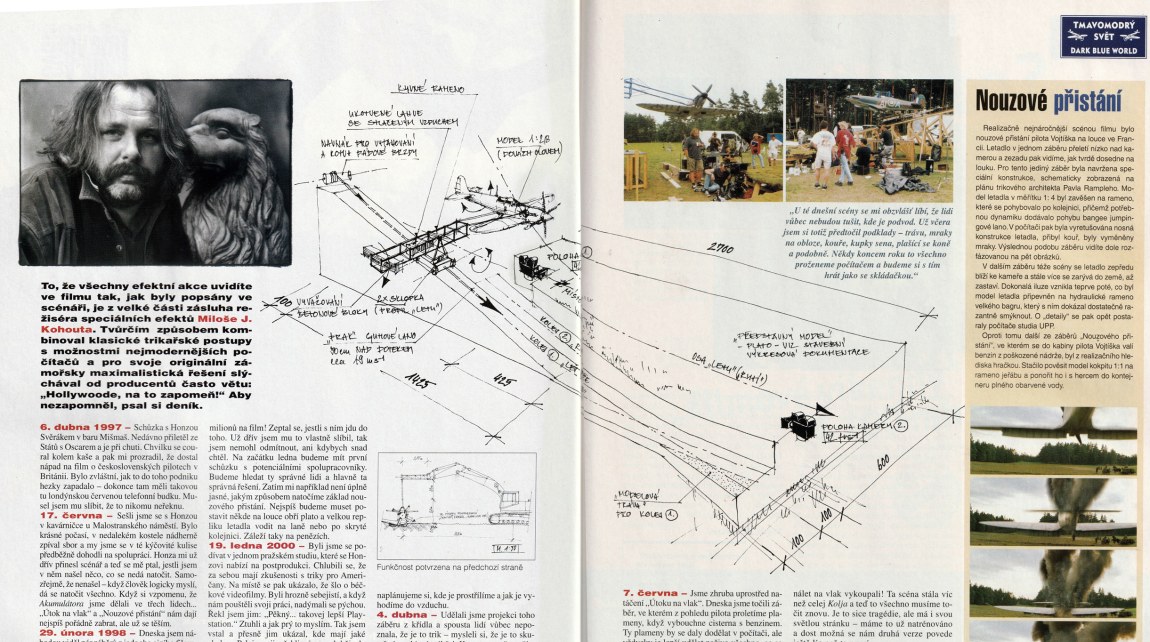
The finished film contained 240 effects shots. Some of the aircraft never actually took off—they existed only as models, mock-ups, or images added to the filmed material later.
Contemporary press described Miloš’s role quite precisely. He created the visual concepts for the effects scenes, helped construct them during location shooting, and subsequently supervised their completion at UPP studios. This was where his ability to envision an image that did not yet exist at the moment of filming came fully into its own.
The actors, camera, and lighting all had to behave as though an aircraft were truly flying past them, although it would only be added to the shot much later. Once again, Miloš was doing what he had known how to do since childhood: looking into an empty space and seeing a finished image.
One contemporary article nicknamed him “Hollywood.” It was slightly exaggerated, but accurate in its own way. Miloš did not bring Hollywood money into Czech cinema. He brought a way of searching for solutions where others mainly saw limitations.
Work on the effects shots for Smart Philip followed, and later visual collaboration on the effects for Kooky. Technologies changed, but the principle remained the same: first, the image had to be seen; only then could one work out how to make it real.
From St Nicholas to Monkey Business
His work extended far beyond the cinema screen. He directed image commercials honoured at international festivals and created television graphics for TV Nova, Czech Television, and Prima. In Los Angeles, he received a Promax “Golden Hit” award for television graphics, and his work also succeeded at the London International Awards and the European Music Video Awards.
Music formed another important chapter in his career. He worked with Czech and international performers and contributed to music videos, some of which became near-symbols of their era.
The 1990s gave music videos a freedom Czech television had scarcely known before. Budgets were usually small, so the ideas had to seem all the more ambitious.
One of the most striking examples was Lucie Bílá and Ilona Csáková’s 1992 video Love Is Love. Directed by Filip Renč, it later became one of the best-known Czech music videos of all time. Miloš recalls that they had only eighty thousand crowns at their disposal, and the people involved worked without fees. Together with his friend, painter Jiří Čihák, Miloš created the painted Petřín backdrop against which part of the video takes place. And because his artistic work occasionally turned unexpectedly into acting, he also appeared on camera—as St Nicholas.
The video was made on a budget that today might not even cover the rental of the necessary equipment. Money was replaced by ideas, enthusiasm, and a willingness to work for free. Miloš’s St Nicholas thus became an unexpected part of one of the first vivid images of the more sexually liberated 1990s.
Its open view of different forms of love outraged not only some viewers, but also representatives of the Church. The video could therefore only be broadcast after ten at night, and its boldest passages had to be obscured by simulated picture interference.
Miloš’s first independently made music video, however, was Sleeping Beauty by the group Sluníčko, featuring the very young Lenka Dusilová and singer Pancho. It received an extraordinary response: Czech Television broadcast it 360 times in a single year.
For Iveta Bartošová, he created the video for You Can Lie, one of her notable songs of the mid-1990s. He later worked with Lucie Bílá again on the video eSeMeS, this time as director. Petr Hojda was the cinematographer and Filip Malásek edited it.
He also directed the video for Monkey Business’s My Friends. Roman Holý later recalled the production as a project built on exaggeration and humour—qualities that always suited Miloš. He could create an image that appeared utterly serious while quietly laughing at itself.
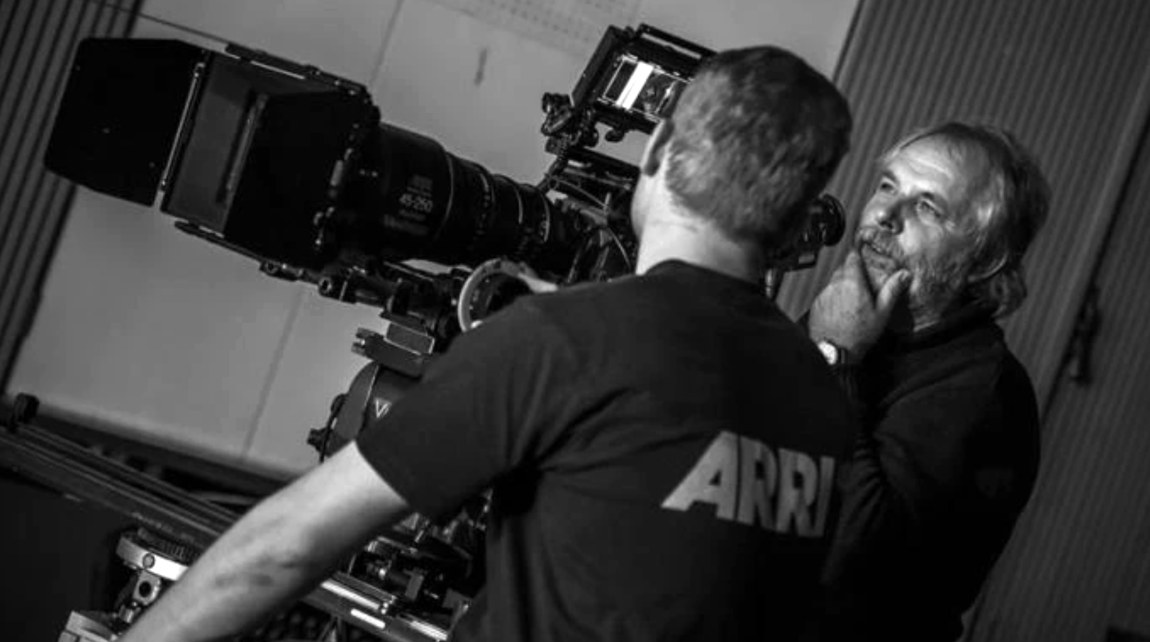
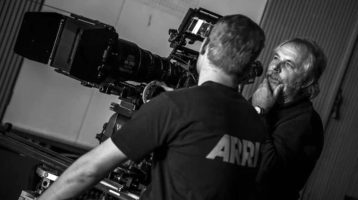
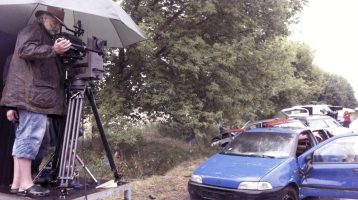
Miloš J. Kohout during the filming of a music video for the band Portless.
His music-video career also included collaborations with Lobby, Latino Dream, Pražský výběr, and Symphonic Rumpál with Kačes, as well as the video Despondancing. In addition to Czech artists, he worked for international musicians including the British band Blur, Alex Carrington, and the Austrian duo Unique II. Their hit Do What You Please later appeared in the international music-video compilation Gold 90.
A video for Austrian singer Reinhold Bilgeri, made with a team whose credits included work for Falco, was another exceptional success. It remained in the MTV Top 40 for two months and won an award for best music video at the end of the year.
Advertising as a laboratory
Miloš entered the world of advertising shortly before the revolution. In a London gallery, one of his paintings caught the attention of Coca-Cola representatives, who wanted him to devise a commercial for the brand. The Australian production company Fontana Films was commissioned to produce it. Its representatives flew to Czechoslovakia to track down the painter and offer him the job.
Miloš created both the set design and the story for the commercial. He went on to complete another project with the Australian production team, and through this collaboration began to discover how the world of major advertising worked.
After the revolution, international brands and advertising agencies entered the Czech market in search of a new visual language. Miloš concentrated primarily on image commercials, which were not simply about introducing a product, but about atmosphere, emotion, and a memorable image. For him, an advertisement became a short film that had to tell a story in a matter of seconds—and still persuade the viewer to buy something.
It was here that he could fully combine painterly composition, production design, effects, editing, and emerging digital technologies. He worked for brands including Varta, Olympus, Sony, JVC, Nissan, Mercedes, Škoda, Panasonic, Coca-Cola, Bohemia Sekt, Hrabě Hubert, Pilsner Urquell, Staropramen, Zlatý Bažant, Lučina, and Orion. He also contributed to image campaigns for banks, including Tatra banka.
Not every commission was intended to persuade viewers to make a purchase. For a Slovak ministry, he also took part in an information campaign connected with the country’s transition to the euro. Here, the image did not serve a brand, but helped people understand a change that would affect their everyday lives.
His work attracted attention abroad as well. A surviving certificate from 1997 confirms that his Olympus camera commercial was a finalist at the London International Advertising Awards. Miloš is credited as art director, director, and editor. In 1999, he won gold at Promax & BDA Europe for the short project Commercials/Lightbulbs.
His achievements in television graphics also took him to Los Angeles, where he spent two months observing the working methods of major American studios and collaborating with them. He did not return to Prague wishing to become an American. He brought home something much more useful: the knowledge that even a highly complex image can be created if everyone knows in advance what result they are working towards.
Hollywood was not a place on a map for him. It was a way of thinking.
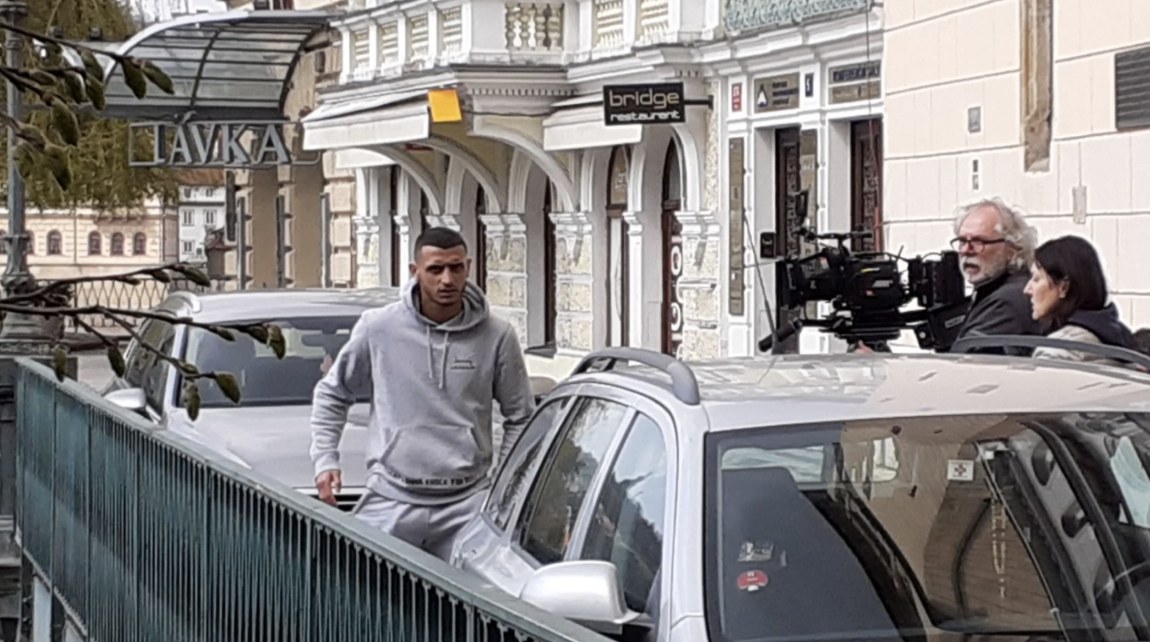
Miloš J. Kohout during the filming of a documentary.
The dream of a thousand storeys
After years of working on other people’s projects, Miloš decided to make a film of his own.
The short film The Dream, starring Karel Roden, was conceived as a pilot for an adaptation of Jan Weiss’s novel The House of a Thousand Storeys. Miloš directed it and also contributed to the screenplay. The twenty-one-minute film was transferred to a computer, digitally edited, colour-graded, and enhanced with effects before being transferred back onto film stock.
Today, such a process does not sound revolutionary. At the beginning of the new millennium, however, it represented a path Czech cinema was only learning to take.
The feature-length House of a Thousand Storeys was never made. What remained was The Dream—proof that even an unrealised project can survive in a smaller yet distinctive form.
Next came the psychological film Eye in the Wall, which Miloš directed from a screenplay written with Iva Hercíková. The road from production to theatrical release was long and complicated. The producer wanted to accelerate filming, and a substantial part of the funds intended for completion was ultimately unavailable. The entire first third of the screenplay—which Miloš considered essential to the meaning of the story—was never filmed. The version released in cinemas was therefore one he could never fully embrace as its director, and it failed to find an audience at its 2009 premiere.
For Miloš, it was more than the failure of a single film. It was the moment he discovered that even a director may not hold his own story in his hands.
He withdrew from public view, began building a new house, and gradually returned to where he had started—to the painter’s easel.
The man who kept no archive
When I ask Miloš about his work today, he rarely begins with a date. He remembers an image, a situation, or a sentence someone said. He recalls how the light fell across a set, who argued with whom, or why something had to be completely rebuilt overnight.
Where the contract, photograph, or certificate might be, he often cannot remember.
“It will be somewhere,” he replies with disarming calm.
I have gradually discovered that, in Miloš’s case, “somewhere” may mean a drawer, a box, the archive of a foreign production company, or another continent.
Miloš did not carefully archive his life. He lived it. While others saved press clippings and compiled professional biographies, he was already drawing the next design, preparing a new shot, or standing before a blank canvas.
Perhaps that is also why he remained almost invisible to the public. Millions of people knew his work without ever knowing whose it was.
When the French-German television channel ARTE came to make a short documentary about him, he asked the director in bewilderment:
“Why me? Nobody knows who I am.”
The French director replied:
“They may not know you here, but they do in France.”
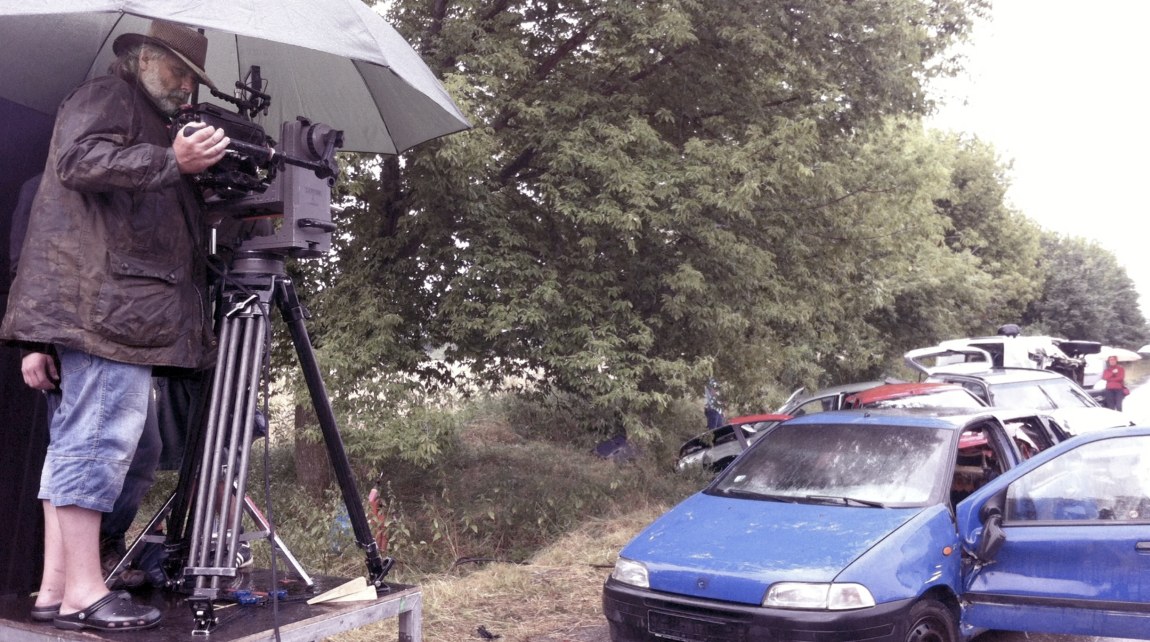
Miloš J. Kohout behind the camera during the filming of Petr Vachler’s The Secret and the Meaning of Life.
Back to the smell of oil paint
The circle closes in a peculiar way. The boy whom the regime prevented from attending art school passed through the European and American film industries, worked on an Oscar-winning production, created aerial dogfights through visual effects, and rejected an offer for which others would have crossed half the world—and then returned to painting.
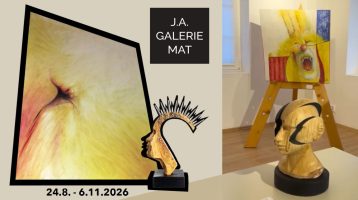
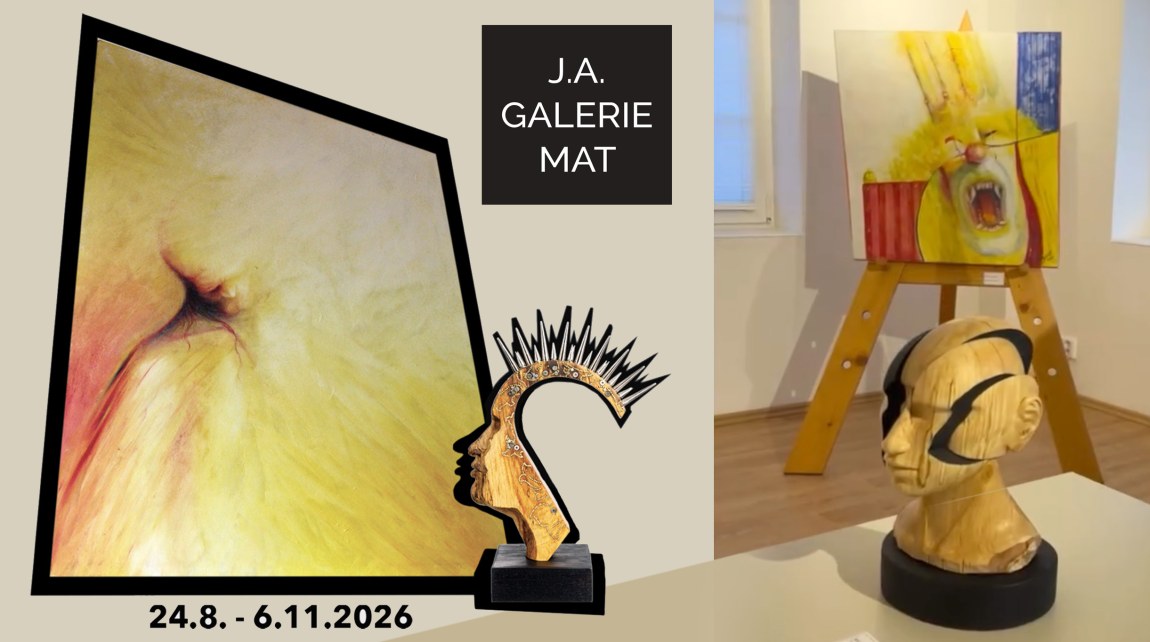
The exhibition at Galerie MAT is not an isolated return, but already the fifth consecutive stop for his paintings. The exhibitions have followed one another, and Miloš now jokes that they have effectively become one large travelling show.
On 24 August 2026, his paintings will be presented in the exhibition The Strength of Canvas, the Fragility of Dreams at J. A. Galerie MAT on Charles Square in Prague. Miloš is thus returning to a place that once intersected with his film work. Then, he entered it through film. Today, he arrives as a painter.
When I look at Miloš today, standing before a painting in progress, I once again see the little boy whose teacher asked him what he wanted to be when he grew up.
He did not yet know how many prohibitions, interrogations, films, paintings, and unexpected detours it would cost him to preserve that childhood wish.
But he succeeded. In the end, he fought for his right to play.
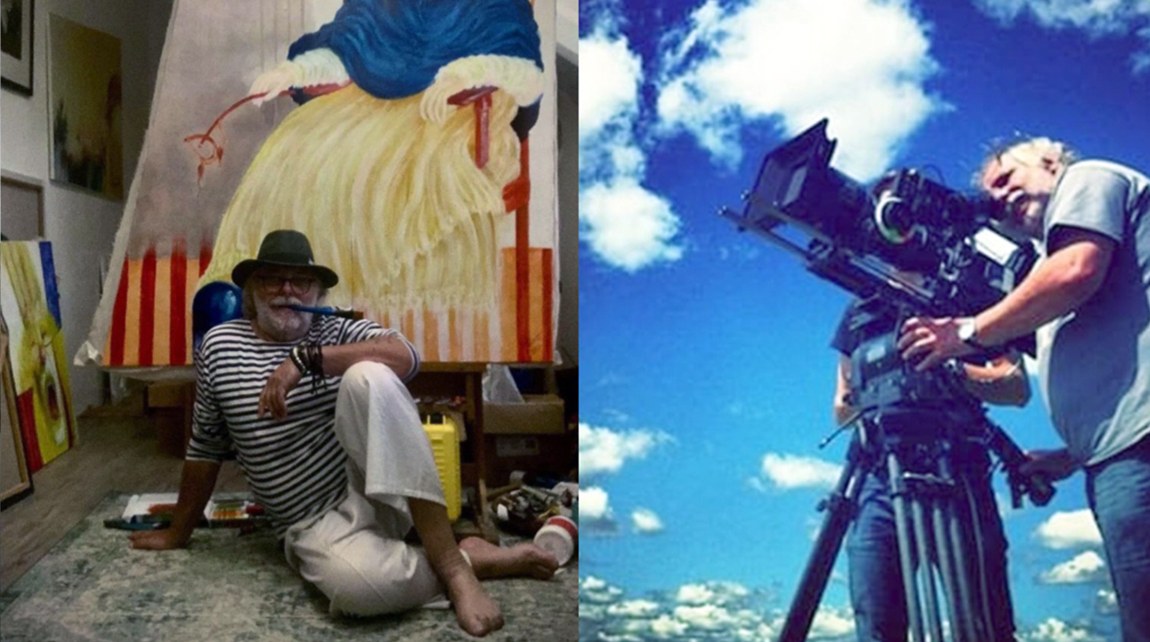
Two worlds of Miloš J. Kohout
People who see things before everyone else rarely have an easy life. They speak a language their contemporaries do not always understand, cross established boundaries, and often become a thorn in the side of those who want no change. They therefore frequently pay for their gift with loneliness and must continue along their own artistic path almost like solitary foot soldiers.
Despite all the obstacles placed in his way by both the regime and life itself, Miloš J. Kohout was, in truth, enormously fortunate. He managed to create freely in an unfree age, touched the world of international cinema, and left his mark on Czech film, advertising, music videos, and fine art.
Whether he is a genius, a visionary, or simply a man who never learned to see the world in an ordinary way is for each of us to decide.